Navigating the EV Market: Top Picks for Right-Hand Drive Markets in Hong Kong, UK & Japan

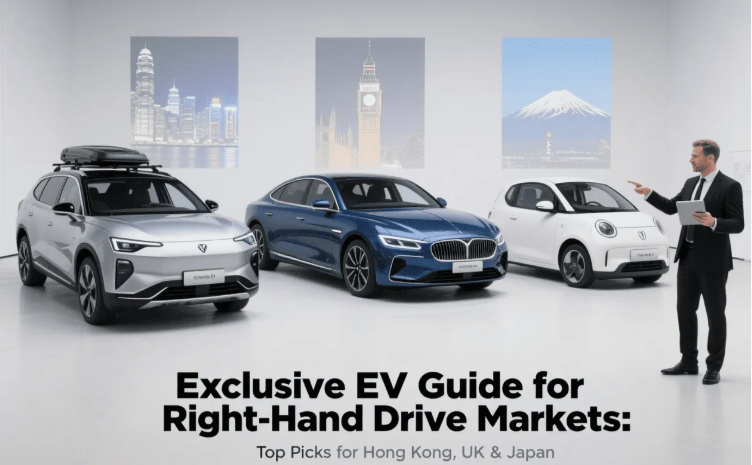

- 1 Navigating the EV Market: Top Picks for Right-Hand Drive Markets in Hong Kong, UK & Japan
- 1.0.1 Understanding Your Driving Habits and Range Needs
- 1.0.2 Home Charging Solutions
- 1.0.3 Public Charging Infrastructure Availability
- 1.0.4 Vehicle Dimensions and Parking
- 1.0.5 Compact & City-Friendly EVs
- 1.0.6 Family & All-Rounder EVs
- 1.0.7 Luxury & Performance EVs
- 1.0.8 The Evolving Public Charging Network
- 1.0.9 Home Charging is Still King
- 1.0.10 Smart Charging and Battery Health
- 1.0.11 Purchase Grants and Tax Reductions
- 1.0.12 Urban Access and Environmental Zones
- 1.0.13 Future Policy Directions
- 1.0.14 Expanding Model Availability
- 1.0.15 Advancements in Battery Technology
- 1.0.16 Infrastructure Growth and Smart Grid Integration
- 1.0.17 Autonomous Driving Features and Connectivity
- 1.0.18 Test Drive Multiple Models
- 1.0.19 Research Charging Options in Your Area
- 1.0.20 Understand the Total Cost of Ownership
- 1.0.21 Don’t Obsess Over Maximum Range
- 1.0.22 Talk to Current EV Owners
- 1.1 FAQs
- 1.1.1 1. What are the key considerations for EV buyers in Hong Kong, UK & Japan?
- 1.1.2 2. What are the top EV models for right-hand drive markets like Hong Kong, UK & Japan?
- 1.1.3 3. How is the charging infrastructure and range anxiety addressed in Hong Kong, UK & Japan?
- 1.1.4 4. What government incentives and policies are in place for EVs in Hong Kong, UK & Japan?
- 1.1.5 5. What is the future outlook for EVs in right-hand drive markets like Hong Kong, UK & Japan?
Thinking about going electric in Hong Kong, the UK, or Japan? Good news – the EV market in these right-hand drive (RHD) regions is booming, offering some fantastic options. Whether you’re looking for efficiency, performance, or a good all-rounder, there’s likely an EV that fits your needs. This article will help you navigate the landscape, offering practical advice and highlighting some top picks.
For a long time, the global automotive industry has predominantly catered to left-hand drive (LHD) markets, simply because there are more of them. However, that’s steadily changing, particularly with the rise of electric vehicles. Countries like the UK, Japan, and Hong Kong, all with RHD traffic, are now seeing a significant influx of EV models specifically designed or adapted for their roads.
This isn’t just about moving the steering wheel to the other side. Manufacturers are increasingly considering the unique needs of these markets, from charging port placements to infotainment system orientations. The growth isn’t uniform, of course. Japan, for instance, has a long history with hybrid technology and a more recent, but accelerating, embrace of full EVs. The UK has seen rapid adoption, driven by strong government incentives, while Hong Kong presents its own set of urban challenges and opportunities for EV growth. Understanding these nuances is crucial for any potential buyer in these regions.
Before you even start looking at specific models, it’s important to think about a few practicalities that are especially relevant in these RHD markets.
Understanding Your Driving Habits and Range Needs
This might sound obvious, but it’s even more critical with an EV. Do you mostly do short city commutes in Hong Kong, or are you planning regular long trips across the UK countryside? The “range anxiety” often associated with EVs is much less of an issue these days, but knowing your typical distances will help you choose a battery size that’s right for you without overspending on unnecessary capacity. Remember that factors like temperature, driving style, and even using the air conditioning can affect real-world range.
Home Charging Solutions
For many EV owners, home charging is the most convenient and cost-effective way to power up. In the UK, a dedicated wall charger (often called a ‘wallbox’) is a common sight. In Hong Kong, apartment living can make this trickier, requiring cooperation from building management or relying more on public charging infrastructure. Japan, with its high population density, also presents unique challenges for individual home charger installation, though solutions are emerging. Consider parking situations and electrical capacity when planning for a home charger.
Public Charging Infrastructure Availability
While home charging is great, you’ll inevitably need to use public chargers. The UK has a rapidly expanding public charging network, though reliability can still be a mixed bag depending on the provider. Japan, while strong on DC fast charging (especially with CHAdeMO connectors), is also expanding its AC public charging. Hong Kong, being a smaller territory, has a relatively good density of public chargers, but competition for them can be high, particularly during peak hours. Researching the networks in your specific area is a must.
Vehicle Dimensions and Parking
Hong Kong’s notoriously tight parking spaces and narrow streets mean that compact EVs often have an advantage. The UK and Japan also have their fair share of older towns with smaller roads, making car size a significant factor. While many electric cars are surprisingly roomy inside, their exterior footprint can vary. Always check the dimensions and consider how it will fit into your typical parking spots.
Now onto the fun part – which cars should you be looking at? Here are some top contenders that are readily available and well-suited for RHD markets.
Compact & City-Friendly EVs
For urban environments in particular, smaller EVs shine. The Nissan Leaf has long been a popular choice in Japan and the UK, known for its reliability and practical hatchback design. It continues to offer good value and a decent range for most city and suburban driving.
Another excellent option is the MG4 EV, which has been a runaway success in the UK. It offers fantastic value, a surprisingly engaging driving experience, and a good range, all in a stylish package. Its rear-wheel drive setup also gives it a fun edge.
Small but mighty, the Mini Electric (or Cooper SE) offers a premium feel and a characterful driving experience, albeit with a more limited range. It’s perfect for those shorter, zippy commutes in cities like Hong Kong where agility is key.
Family & All-Rounder EVs
When you need a bit more space, there are plenty of excellent choices. The Tesla Model 3 continues to dominate in many markets, including the UK and Japan, thanks to its impressive range, performance, and access to Tesla’s Supercharger network. It’s a compelling package for families and individuals alike.
The Hyundai Ioniq 5 and its sibling, the Kia EV6, have both garnered significant praise for their distinctive styling, comfortable interiors, and advanced charging capabilities. They offer excellent range and practical space, making them ideal for families in all three regions. Their 800V architecture allows for incredibly fast charging where infrastructure supports it.
For a more premium experience, the BMW i4 offers a compelling blend of luxury, performance, and efficiency. It’s essentially an electric 4 Series Gran Coupe, providing a familiar driving dynamic with zero emissions.
Luxury & Performance EVs
If budget allows and you crave more refinement or speed, the market also serves up some exciting options. The Porsche Taycan (and its Cross Turismo variant) continues to be an benchmark for electric performance, available and highly sought after in all these RHD markets. Its meticulous build quality and exhilarating driving dynamics are hard to beat.
The Mercedes-Benz EQE and EQS sedans offer opulent interiors, cutting-edge technology, and impressive range, providing a true luxury EV experience. These are perfect for those who value comfort and sophistication on their journeys.
Not to be forgotten, the Tesla Model Y expands on the Model 3’s success with added SUV practicality. It offers similar performance and tech, but with more cargo space and a higher driving position, making it a very popular choice for those needing more utility.
Range anxiety, the fear of running out of charge, is a common concern for prospective EV buyers. However, in these RHD markets, the infrastructure is constantly improving.
The Evolving Public Charging Network
In the UK, networks like Gridserve, bp pulse, and Ionity are rapidly expanding their high-power charging stations along major motorways and in urban hubs. Compatibility can vary, with most newer cars using the CCS (Combined Charging System) standard, while some older Japanese EVs might use CHAdeMO.
Japan has a robust network, particularly of CHAdeMO fast chargers, a standard it championed. However, CCS is becoming more prevalent with the influx of European and American EVs. The country’s focus on efficiency and compact solutions extends to its charging stations, often integrated cleverly into urban environments.
Hong Kong, despite its density, has seen a significant increase in public charging points in car parks, shopping centers, and government facilities. The challenge often isn’t the lack of chargers, but the availability of suitable ones during peak times. Planning ahead using apps is crucial.
Home Charging is Still King
While public charging is essential for longer trips, the vast majority of EV charging happens at home or work. Installing a dedicated wall charger significantly enhances the convenience and cost-effectiveness of EV ownership. Government grants in the UK (though sometimes changing) have helped subsidize these installations. For those in apartments in Hong Kong or Japan, discussions with building management about shared charging solutions or even just access to a standard power outlet can be a first step.
Smart Charging and Battery Health
Many modern EVs and chargers come with smart charging features, allowing you to schedule charging during off-peak electricity hours to save money. This is particularly useful in the UK with its varied electricity tariffs. These systems can also help manage battery health by avoiding constant full charges, which can degrade the battery over time.
Governments in these regions are actively encouraging EV adoption through various incentives. These can significantly reduce the initial cost of ownership or offer ongoing benefits.
Purchase Grants and Tax Reductions
The UK has historically offered grants for new EV purchases, though these have been phased out for cars and now focus more on vans and taxis. However, benefits like reduced road tax (Vehicle Excise Duty) and lower Benefit-in-Kind (BiK) tax for company car users remain a powerful incentive.
In Hong Kong, the “One-for-One Replacement” scheme offers significant tax concessions if you scrap an older internal combustion engine (ICE) vehicle when buying a new EV. Without this scheme, the First Registration Tax (FRT) can be substantial, making the replacement scheme highly attractive.
Japan also has its own subsidies and tax breaks, often varying by prefecture. These can include national grants for new EV purchases and reductions in vehicle acquisition tax and weight tax.
Urban Access and Environmental Zones
Many cities in the UK operate Ultra Low Emission Zones (ULEZ) or Clean Air Zones (CAZ), where non-compliant polluting vehicles incur daily charges. EVs are exempt from these, providing a significant financial benefit for commuters in cities like London.
While Hong Kong doesn’t have explicit LEZs in the same way, its general drive for cleaner air strongly favors EVs, which contribute to better urban air quality. Japan also encourages EV use in its densely populated cities, though penalties for ICE vehicles are less common than in the UK.
Future Policy Directions
It’s worth noting that government policies can change. The UK is committed to phasing out new petrol and diesel car sales, which drives continued EV support. Japan is also pushing for a more carbon-neutral transport sector, and Hong Kong continues to invest in charging infrastructure and public transport electrification. Staying informed about current incentives closer to your purchase date is always a good idea.
The trajectory for EVs in RHD markets is firmly upwards. We can expect even more choice, better range, and faster charging in the coming years.
Expanding Model Availability
As global EV production scales up, manufacturers will increasingly offer their models in RHD configurations. This means more entry-level EVs, more SUVs, and more niche vehicles becoming available, broadening the appeal to a wider range of buyers.
Advancements in Battery Technology
Solid-state batteries, improved energy density, and faster charging capabilities are all on the horizon. This will lead to even longer ranges, shorter charging times, and potentially lighter vehicles, further eroding any remaining range anxiety.
Infrastructure Growth and Smart Grid Integration
The charging network will continue to grow and become more reliable. Smart grid integration will allow EVs to become active participants in energy management, potentially even feeding power back into the grid during peak demand (Vehicle-to-Grid or V2G technology), offering new revenue streams for owners.
Autonomous Driving Features and Connectivity
Advanced driver-assistance systems (ADAS) and increasingly autonomous driving features will become standard, with EVs leading the way due to their inherent electrical architecture. Enhanced connectivity will also offer more seamless integration with smart home systems and personalized driving experiences.
Making the switch to an EV is exciting, but a little preparation goes a long way.
Test Drive Multiple Models
This is perhaps the most important tip. EVs drive differently from ICE cars – the instant torque, regenerative braking, and silent operation are unique. Don’t just settle on the first one you like; try out a few to see which driving dynamics suit you best. Pay attention to infotainment usability in a RHD context.
Research Charging Options in Your Area
Before you commit, map out where you’ll charge the most. Use apps like Zap-Map (UK), PTT (Japan), or PlugShare (global, useful for Hong Kong) to identify public charging points near your home, work, and frequent destinations. Consider membership cards or apps for different networks.
Understand the Total Cost of Ownership
While the upfront cost of an EV can sometimes be higher, factor in potential savings on fuel, road tax, maintenance (fewer moving parts), and urban access charges. Government incentives can also swing the balance significantly. Always look at the long-term financial picture.
Don’t Obsess Over Maximum Range
Unless you frequently undertake extremely long journeys, don’t let the highest range figures dictate your choice. A car with 200-250 miles of real-world range is more than enough for most drivers, especially if you have home charging. Overspending on a larger battery you don’t need is inefficient.
Talk to Current EV Owners
There’s no better resource than someone who already owns an EV in your region. They can offer real-world insights into charging habits, typical ranges, and local quirks of EV ownership that you won’t find in brochures. Online forums and local EV owner groups are great places to connect.
With these considerations in mind, you’ll be well-equipped to make an informed decision and enjoy the many benefits of electric vehicle ownership in Hong Kong, the UK, or Japan. The future of driving is electric, and these RHD markets are at the forefront of this exciting transformation.
For many EV owners, home charging is the most convenient and cost-effective way to power up. In t.
FAQs
1. What are the key considerations for EV buyers in Hong Kong, UK & Japan?
EV buyers in these markets should consider factors such as range, charging infrastructure, government incentives, and the availability of right-hand drive EV models.
2. What are the top EV models for right-hand drive markets like Hong Kong, UK & Japan?
Some of the top EV models for these markets include the Nissan Leaf, Tesla Model 3, BMW i3, and the Mitsubishi Outlander PHEV.
3. How is the charging infrastructure and range anxiety addressed in Hong Kong, UK & Japan?
These markets have been investing in expanding their charging infrastructure to address range anxiety, with a focus on public charging stations and incentives for home charging installations.
4. What government incentives and policies are in place for EVs in Hong Kong, UK & Japan?
Government incentives and policies include tax incentives, grants for purchasing EVs, exemption from vehicle registration taxes, and subsidies for installing charging infrastructure.
5. What is the future outlook for EVs in right-hand drive markets like Hong Kong, UK & Japan?
The future of EVs in these markets looks promising, with continued government support, advancements in technology, and a growing awareness of environmental issues driving the adoption of electric vehicles.